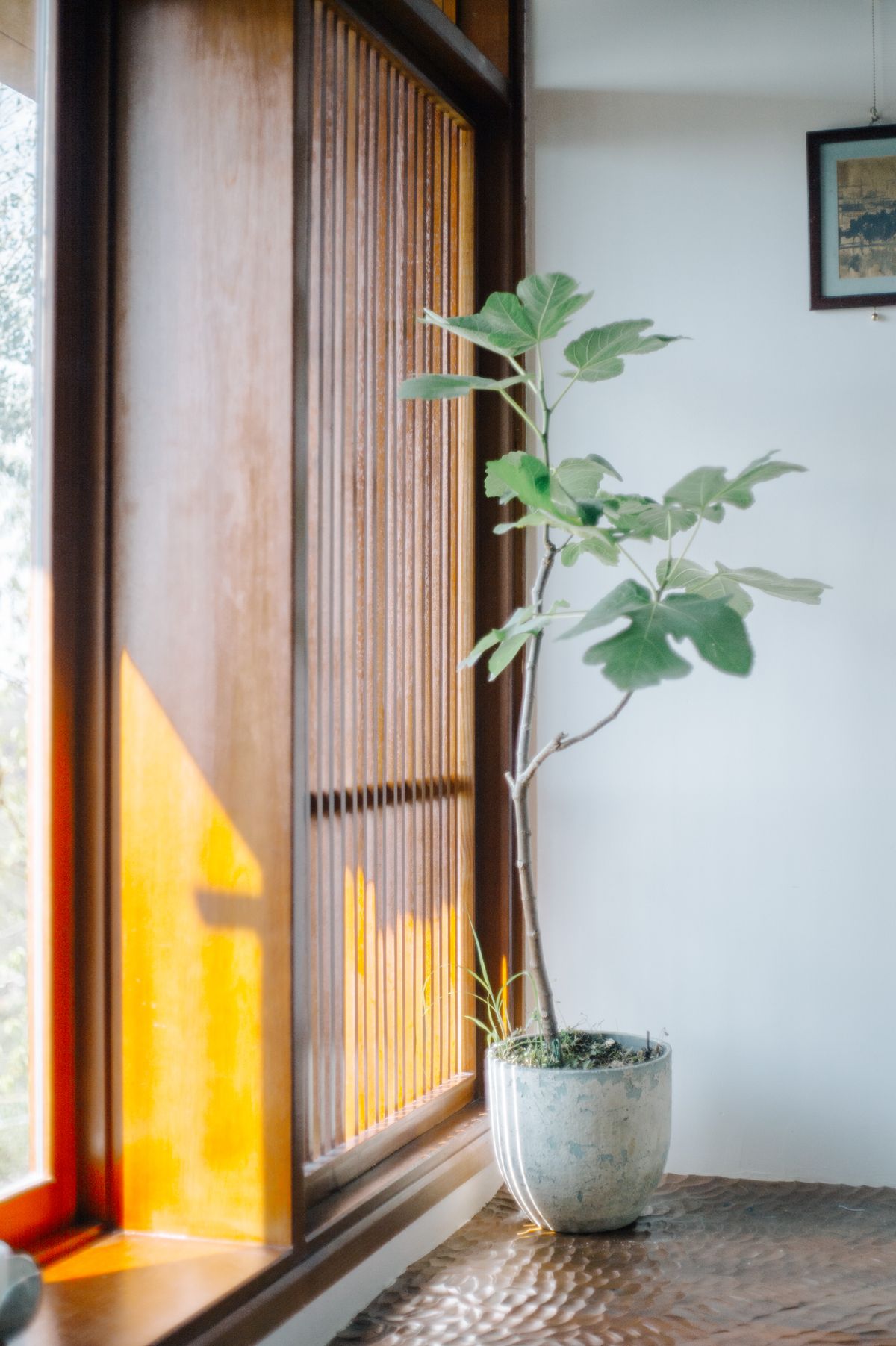
Ficus lyrata — the fiddle leaf fig — is stunning and notoriously fussy. It wants consistent bright light and hates being moved. Get the spot right and it's a showpiece; get it wrong and it drops leaves weekly.
Care at a glance
| Need | What it wants |
|---|---|
| Light | Bright, indirect; a few hours of gentle sun helps. |
| Water | When the top 3–4 cm dries; evenly, not floods. |
| Soil | Chunky, free-draining mix. |
| Humidity | 40%+; misting the leaves helps. |
Pick a spot and don't move it
Fiddle leaf figs drop leaves when relocated or when light changes. Rotate a quarter turn weekly for even growth, but keep it in one place.Common complaints
- Lower leaves drop: often normal adjustment, or too little light.
- Brown spots: overwatering or cold drafts. Keep it warm and steady.
- No growth: not enough light. Move it to the brightest indirect spot you have.
Is fiddle leaf fig toxic?
Yes, to pets and mildly to people. Keep it away from animals.
Should I buy a small or large one?
Smaller plants adapt more easily and are cheaper to replace while you learn its rhythm.
Consistency is the whole game
Fiddle leaf figs hate change. Pick the brightest indirect spot you have — a few hours of gentle sun helps — and leave it there. Rotate a quarter turn weekly for even growth, but don't relocate it. Water when the top 3–4 cm dries, evenly, and keep it away from cold drafts and heating vents. New growth from the top is a good sign; don't panic over the occasional lower leaf dropping as it adjusts.
| Symptom | Likely cause | Fix |
|---|---|---|
| Rapid lower-leaf drop | Move / draft / shock | Return to its spot; steady |
| Brown spots on leaves | Overwatering or cold | Dry soil; warmer spot |
| No new growth | Too little light | Brightest indirect window |
People call this plant fussy; really it just wants to stay put and be lit well. Meet that and it's a showpiece.