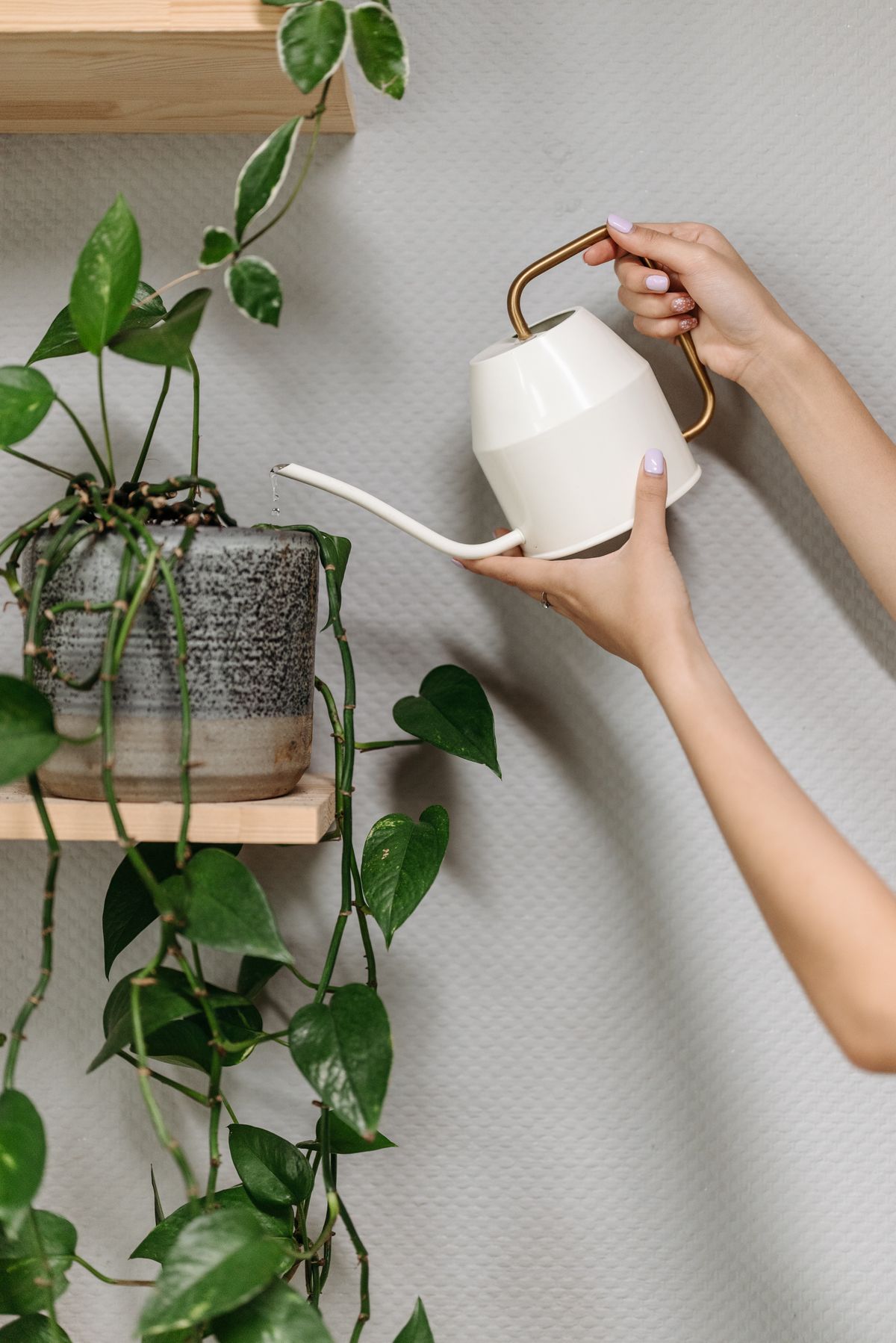
If houseplants could talk, most would beg you to stop watering. The single best skill you can build is knowing when the soil is actually ready — and ignoring the calendar.
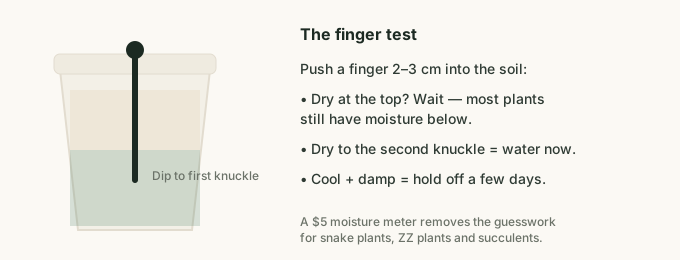
The finger test
Push a finger 2–3 cm into the soil. Dry? Wait a few days. Dry to the second knuckle? Water now. Cool and damp? Hold off. A $5 moisture meter helps for deep pots and for plants that hate guesswork (snake plant, ZZ, succulents).
Soak, don't sprinkle
Water until it runs from the drainage hole, then empty the saucer after 15 minutes. A light sprinkle wets only the top and leaves roots thirsty. This "soak and dry" rhythm suits pothos, philodendron, peace lily and most tropicals.
The saucer is not a reservoir
Leaving a plant sitting in water is the fast track to root rot. Always tip the saucer out.Why "once a week" fails
A plant's water use swings with light, temperature and growth. In a bright summer it may want water twice a week; in a dim winter, every two weeks. Water by the soil, and your plants will tell you when they're thirsty (drooping, then perking up after a drink).
Should I use ice cubes?
No. Ice shocks roots and waters unevenly. Soak the soil properly instead.
Bottom watering — is it better?
For peace lilies and calathea it's great: set the pot in a tray of water for 20 minutes so it drinks from below. Just don't leave it sitting there.
How do I know if I overwatered?
Yellow leaves on wet soil, soft black stems at the base, sour smell. Stop watering, let it dry, and check the roots for rot.
A simple watering routine
Check, don't schedule
Finger in the soil every few days. Dry to the second knuckle = water.
Soak thoroughly
Water until it runs from the hole; a sprinkle only wets the top.
Empty the saucer
Tip it out 15 minutes later. No plant wants wet feet.
Adjust with the season
Twice-weekly in bright summer; every two weeks in dim winter.
Myths that kill plants
"A weekly drink" — the most common cause of root rot we see. "Ice cubes" — they shock roots and water unevenly. "More water fixes drooping" — sometimes drooping is overwatering; check the soil first. When a plant looks off, the soil tells you more than the calendar does.