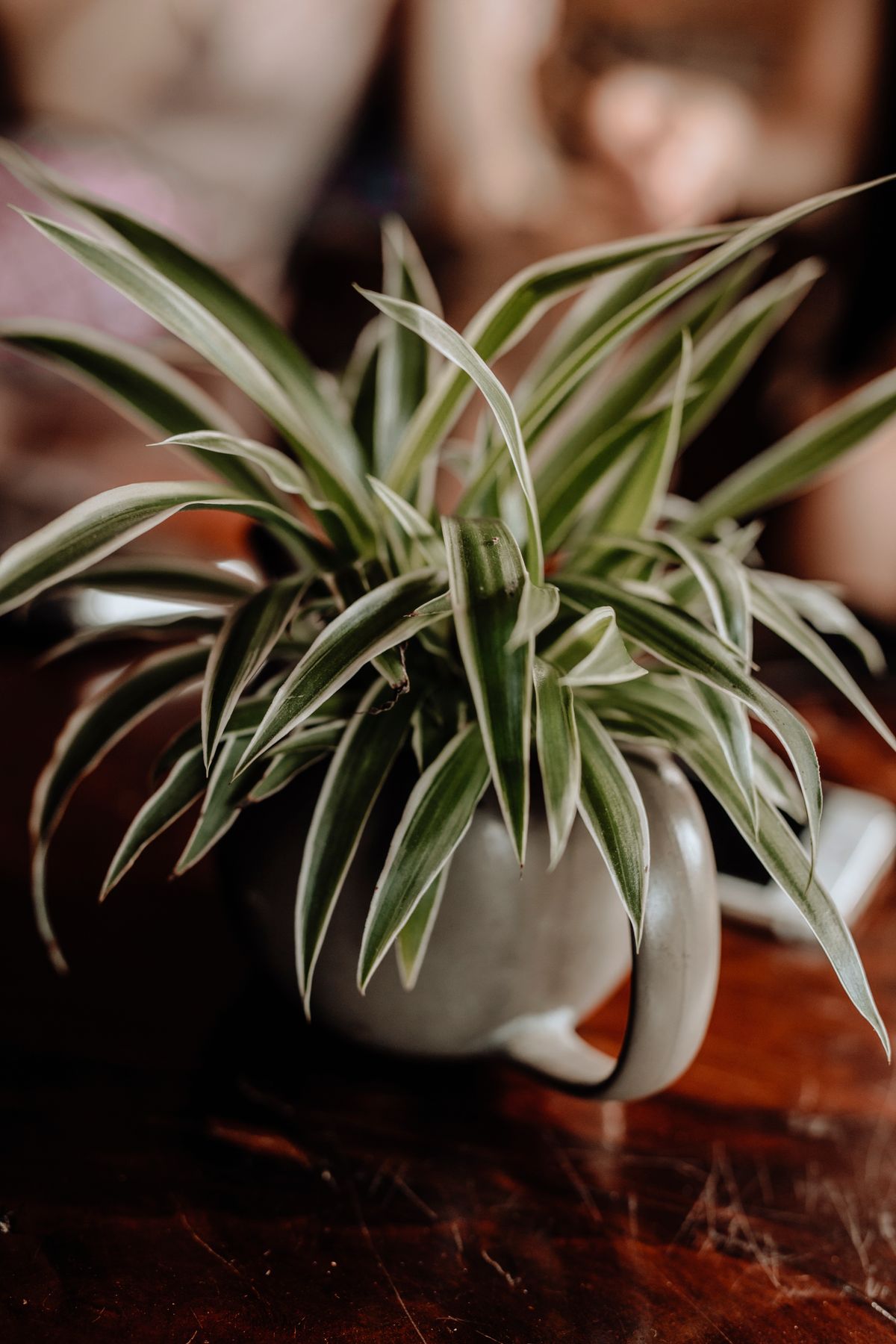
Chlorophytum comosum — the spider plant — is the classic beginner plant and one of the few that's safe around pets. It sends out arching stems with baby "spiderettes" you can pot up for free.
Care at a glance
| Need | What it wants |
|---|---|
| Light | Bright, indirect; tolerates medium. |
| Water | When the top 2–3 cm dries. |
| Soil | Standard indoor mix. |
| Humidity | Flexible; 40%+ best. |
Pet-safe and prolific
Unlike most easy plants, spider plants are non-toxic to cats and dogs — and they multiply fast, so you'll have gifts to give.The babies
Mature plants throw out stems with small plantlets. Once a spiderette has a few roots, snip it off and pot it in soil or float it in water until rooted. Easy, satisfying, free.
Why are the leaf tips brown?
Usually fluoride or chlorine in tap water, or dry air. Use filtered water and the tips stay clean.
My spider plant won't make babies.
It needs to be a bit root-bound and bright. Give it a year and a slightly snug pot.
Spiderettes, tips and tidy growth
Spider plants throw out arching stems with baby plantlets once they're a bit root-bound and bright. Snip a spiderette with a few roots and pot it up — free plant. Brown leaf tips are usually fluoride or chlorine in tap water; filtered water keeps them clean. They like to be snug, so don't rush to up-pot.
| Symptom | Likely cause | Fix |
|---|---|---|
| Brown leaf tips | Tap-water fluoride / dry air | Filter water; humidity |
| No babies | Too young / too roomy | Slightly snug pot; bright light |
| Pale, limp | Overwatering or low light | Dry soil; brighter spot |
One mature spider plant can supply a year of gifts — few plants give back this much.