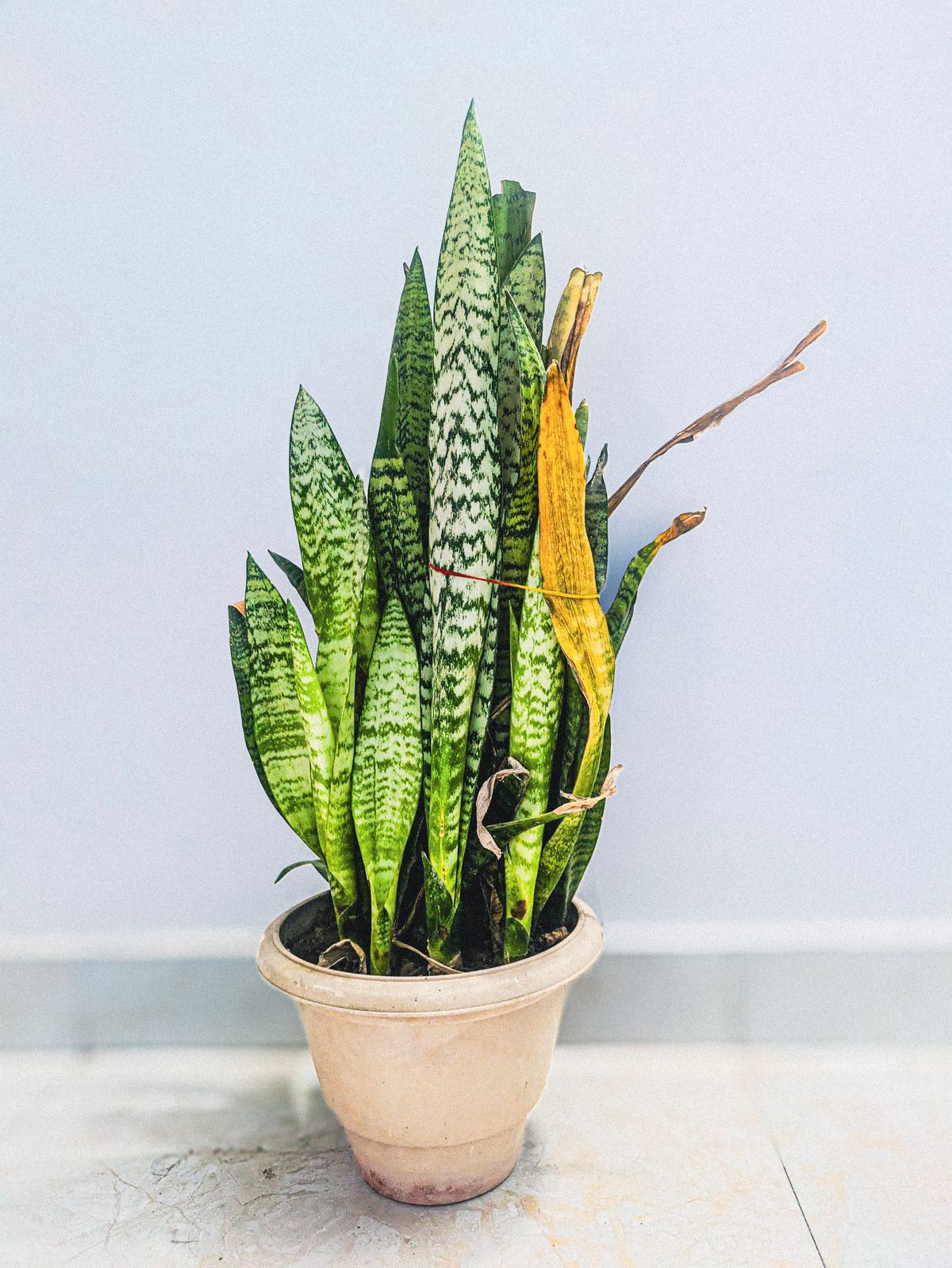
Sansevieria — the snake plant, or mother-in-law's tongue — is the closest thing to indestructible. It stores water in its leaves, so it shrugs off neglect. The one way to kill it is to overwater it.
Care at a glance
| Need | What it wants |
|---|---|
| Light | Low to bright. One of the few that thrives in low light. |
| Water | Every 2–4 weeks. Let soil fully dry between. |
| Soil | Very free-draining; add extra perlite or cactus mix. |
| Humidity | Doesn't care. |
The line: let it dry
Mushy, wrinkled leaves at the base = rot from overwatering. In winter many snake plants want water once a month or less. When in doubt, wait.Why people love it
It's architectural, cleans the air modestly, and tolerates the forgetful. A south or north window both work. Just keep it out of sitting water.
My snake plant isn't growing.
It's slow by nature, especially in low light. If it's healthy, leave it. Repot only when root-bound.
Are snake plants toxic to pets?
Yes, mildly. Keep them out of reach of cats and dogs.
Getting the most from a snake plant
Snake plants are slow, and that's fine. To keep one healthy: use a terracotta pot that dries quickly, give it as much light as you can (it tolerates low but looks better in medium), and resist watering on a schedule. In spring and summer it may send up a tall flower spike — a rarity indoors and a sign it's happy. New pups appear at the base; leave them until they're a third the size of the mother, then divide if you want more.
| Symptom | Likely cause | Fix |
|---|---|---|
| Mushy, wrinkled base | Rot from overwatering | Dry out; check rhizome |
| Curling leaves | Underwatering / very dry air | Water; raise humidity slightly |
| No growth for months | Normal, or too dark | Brighter spot; be patient |
Most "problems" are just this plant's slow nature. If the leaves are firm and upright, it's fine.