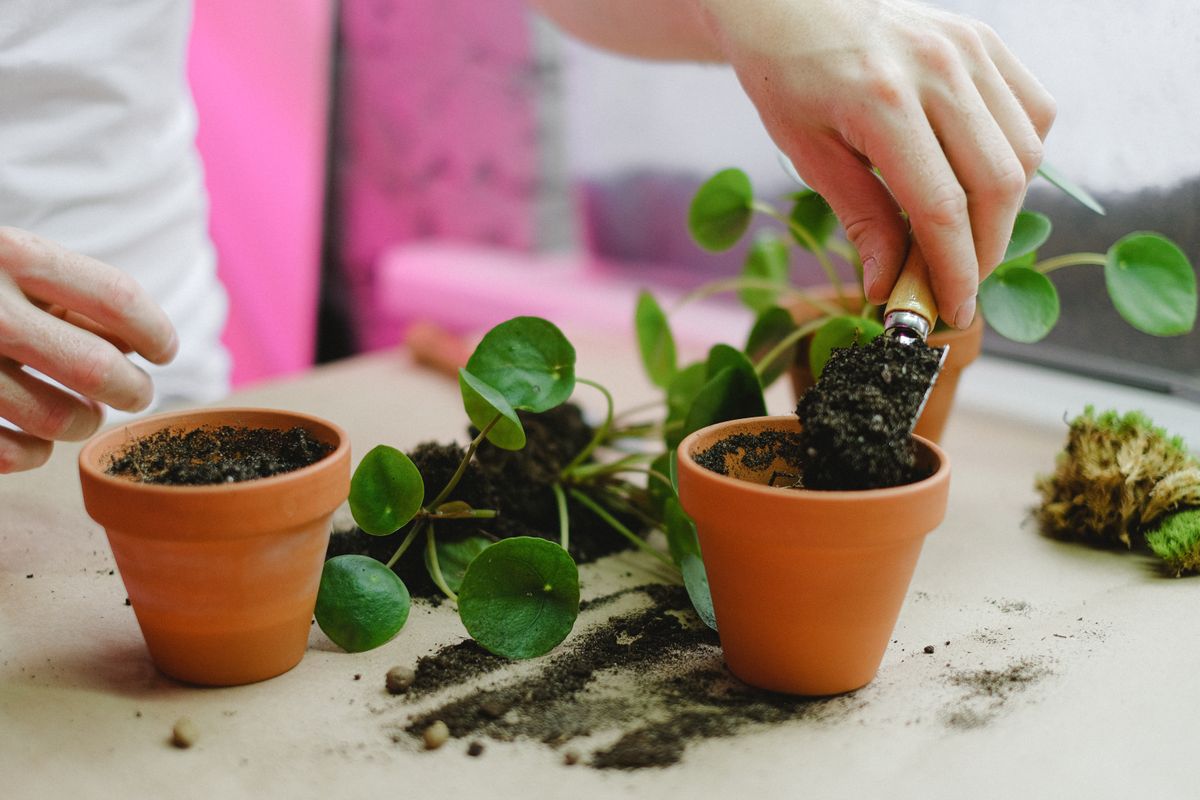
Potting soil from the garden centre is a starting point, not a finished product. What you mix in decides whether roots rot or thrive.
Drainage first
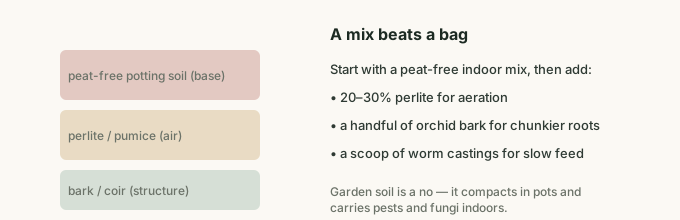
Every indoor plant wants a pot with a hole and a mix that doesn't hold water like a sponge. Start with a peat-free indoor mix and add 20–30% perlite or pumice for air. A handful of orchid bark helps chunky-rooted plants like monstera and orchids.
Skip garden soil
It compacts in pots, holds too much water, and brings pests and fungi indoors. Use a bagged indoor mix as your base.When to repot
- Roots circle the inside of the pot or poke from the drainage hole.
- Water runs straight through without soaking in (the mix has broken down).
- Growth has stalled for a full season despite good care.
Go up only one pot size (about 2–3 cm wider). A pot that's too big stays wet and rots roots. See the repotting guide for the step-by-step.
How often should I repot?
Most plants every 18–24 months. Slow growers like snake plant and ZZ every 3+ years.
Peat-free — does it matter?
Peat harvesting damages wetlands. Peat-free mixes work as well once you adjust watering; they drain a little faster.
Reading a bag of soil
"Indoor potting mix" on the label is a starting point, not a finished product. It holds too much water on its own for most plants. Add 20–30% perlite so roots get air, and a handful of orchid bark for chunky-rooted types like monstera and orchids. Peat-free mixes drain a little faster and are better for wetlands — adjust watering up slightly.
Pot material matters
| Pot | Best for |
|---|---|
| Terracotta | Snake plant, succulents, ZZ — dries fast |
| Glazed ceramic | Pothos, peace lily — holds a little moisture |
| Plastic | Calathea, ferns — keeps humidity-lovers even |
Whatever you pick, a drainage hole is non-negotiable. A "decorative" pot without one is the single most common cause of root rot.