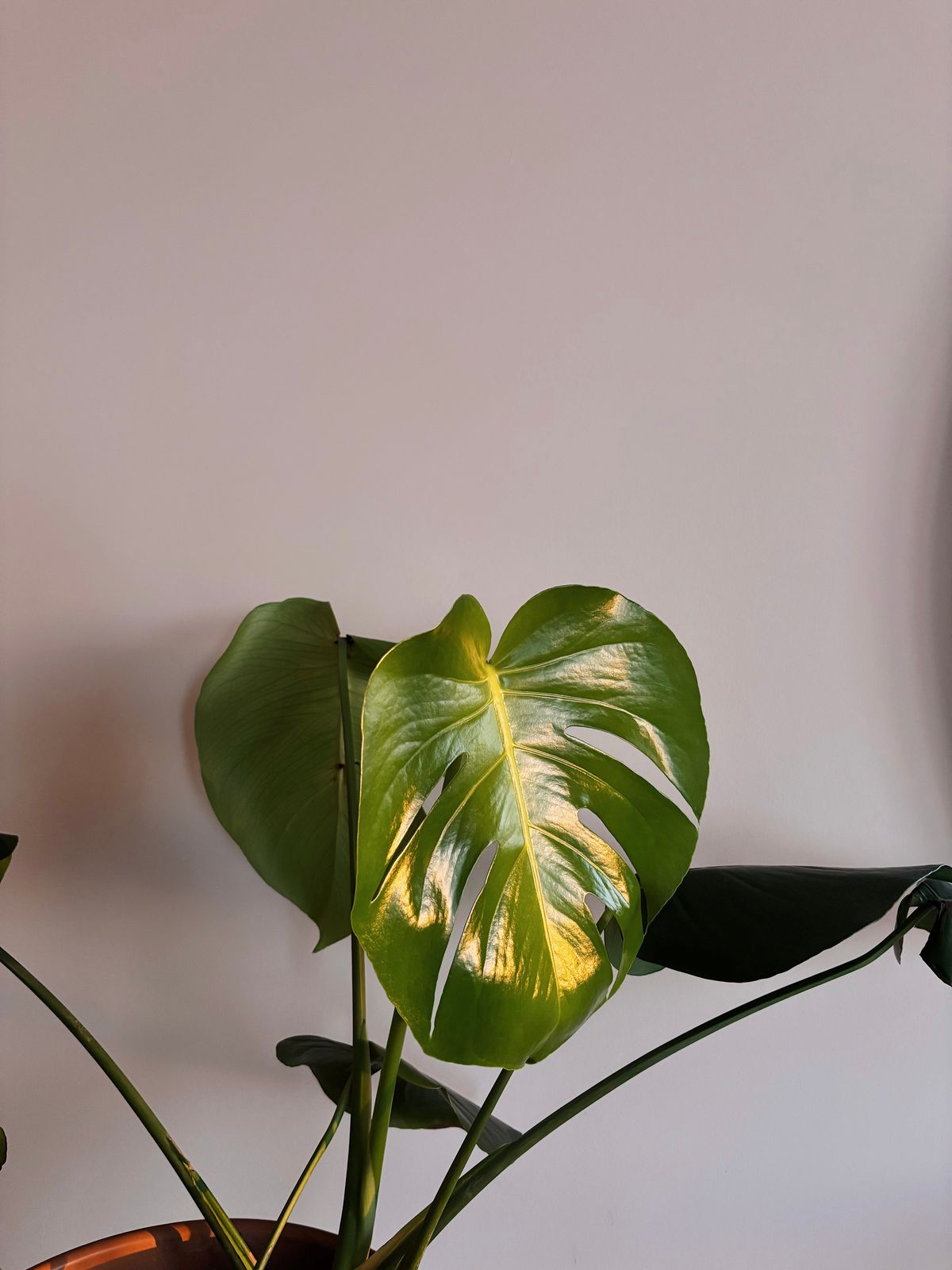
Monstera deliciosa — the Swiss-cheese plant — is the Instagram favourite for good reason: big, sculptural leaves with holes (fenestrations) that develop as the plant matures. It's not hard, but it has opinions about light.
Care at a glance
| Need | What it wants |
|---|---|
| Light | Bright, indirect. More light = more splits. |
| Water | When the top 3–4 cm dries. |
| Soil | Chunky mix: indoor base + perlite + orchid bark. |
| Support | A moss pole lets it climb and leaf up. |
Getting those splits
Fenestrations come with age and light. A young monstera in low light stays small and solid. Give it bright indirect light and a pole to climb, and the leaves get bigger and holier over a year or two.
Wipe the big leaves
Dust collects on those broad surfaces and blocks light. A monthly wipe keeps it photosynthesising.Why are new leaves not splitting?
Too little light or too young. Brighten its spot and give it time.
Is monstera toxic to pets?
Yes. Keep climbing varieties away from cats and dogs.
Growing bigger, holier leaves
Monstera rewards light and patience. Give it bright indirect light and a moss pole to climb; climbing triggers larger leaves with more splits (fenestrations). Wipe the big leaves monthly — dust blocks light on those broad surfaces. In spring, a half-strength feed every few weeks pushes new growth. If it gets leggy, it wants more light, not more water.
| Symptom | Likely cause | Fix |
|---|---|---|
| Small, solid new leaves | Too little light / too young | Brighten; give time |
| Yellow lower leaves | Overwatering or normal aging | Check soil; remove old |
| Brown crispy edges | Low humidity / dry soil | Raise humidity; water evenly |
A monstera is a long-term plant. The leaf that splits this year is the reward for steady care last year.