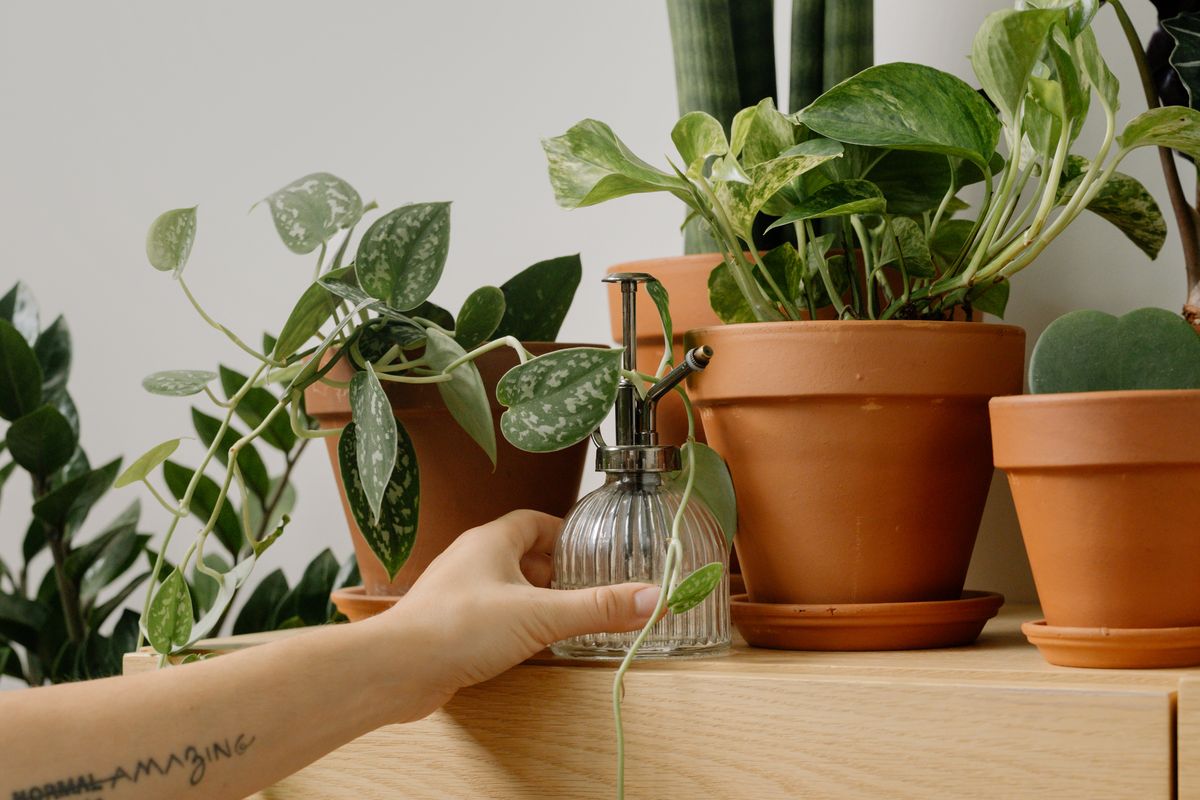
Tropical houseplants evolved under a canopy where the air is damp. Our heated, air-conditioned homes are closer to a desert. You don't need a greenhouse, but you do need to understand what humidity actually does.
Who cares about humidity
Calathea, maranta (prayer plants), ferns, orchids and citrus want 50–60%. Pothos, snake plant, ZZ and succulents barely notice. Don't sweat humidity for the easy group.
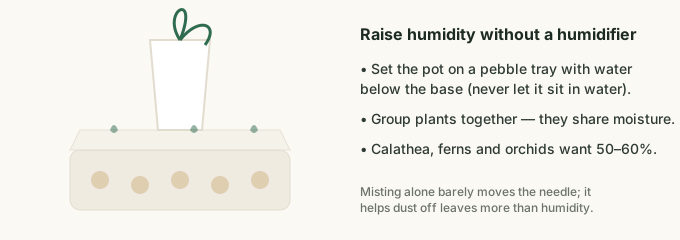
Raise it without a humidifier
- Pebble tray: set the pot on pebbles in a shallow tray of water, base above the waterline.
- Group plants: they share the moisture they transpire.
- Humidifier: the reliable option for a whole shelf of humidity-lovers.
Misting is mostly cosmetic
A spritz raises humidity for minutes. It's worth doing to clean leaves, but don't rely on it for moisture.My calathea gets brown edges despite watering well.
Almost always low humidity or fluoride in tap water. Use filtered water and raise humidity.
Is a bathroom a good plant room?
If it has a window, yes — showers boost humidity for ferns, orchids and calathea.
Measure it (cheaply)
You don't need a gauge to start, but a $10 hygrometer removes the guesswork for humidity-lovers. Aim for 50–60% around calathea, ferns, orchids and prayer plants. Most homes sit at 30–40% in winter with the heating on — which is exactly why those plants crisp at the edges.
What actually moves the needle
- Group plants together — they share the moisture they transpire. A shelf of humidity-lovers creates its own microclimate.
- Humidifier — the reliable fix for a whole collection; set it near the plants, not across the room.
- Pebble tray — good for a single pot, but small in effect.
Misting alone barely changes humidity; it's worth doing to clean leaves, but don't rely on it for moisture. And remember: pothos, snake plant, ZZ and succulents don't care — don't waste effort humidifying them.