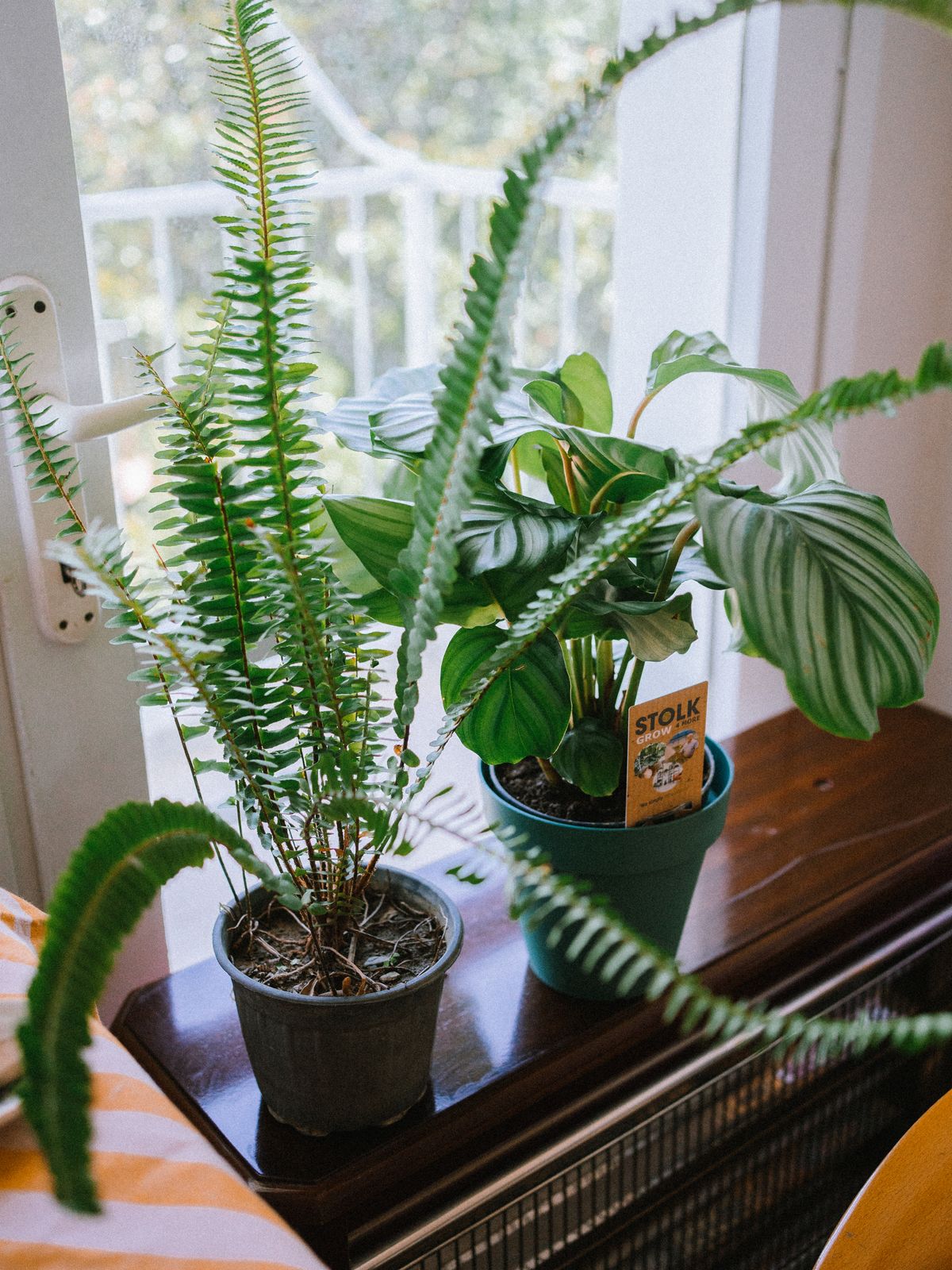
"Give it bright, indirect light" is the most repeated — and least useful — instruction in plant care. Here's what it actually means, and how to read your own home.
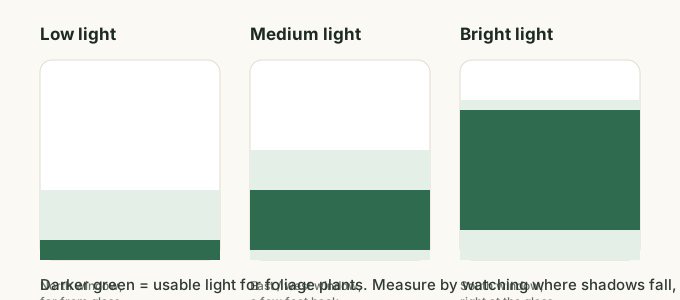
Bright, indirect — decoded
It means plenty of light but no hot sun on the leaves for hours. A south window with a sheer curtain, or a few feet back from an unobstructed east/west window, is the sweet spot for most foliage plants. Direct midday sun through glass can scorch leaves (especially on calathea and ferns).
Measure without a meter
- Shadow test. On a clear day, hold your hand 30 cm from a wall. A sharp, dark shadow = bright. A soft shadow = medium. Almost no shadow = low.
- Watch the season. A bright winter window may be medium in summer once trees leaf out or the sun angle shifts.
Low light ≠ no light
A closet, a windowless bathroom, or 3 metres from a north window is too dark for almost everything except a grow light. If you want plants there, read the grow-light guide.Matching plants to light
- Bright: succulents, herbs, croton, most flowering plants.
- Medium: pothos, philodendron, peperomia, prayer plants.
- Low: snake plant, ZZ plant, cast-iron plant, certain ferns near a window.
Can a plant get too much light?
Yes. Bleached, washed-out leaves or brown scorched patches mean too much direct sun. Move it back or filter with a curtain.
My only window is north. What survives?
Snake plant, ZZ plant, pothos and cast-iron plant. Keep them right at the window, not across the room.
A 30-second light check
Stand in the room at noon
Is there a window right there, or across the room? Distance matters more than direction sometimes.
Cast a hand shadow on the wall
Sharp and dark = bright. Soft = medium. None = low.
Watch a full day
Morning and evening light are gentler than midday; note when the sun actually hits the spot.
Myths worth dropping
"South-facing is best for everything" — not for ferns and calathea, which scorch. "Plants need sun" — most houseplants want bright indirect light, not beams through glass. And "a grow light is cheating" — it's just light; use it where a window fails.
If you're choosing plants, start from your brightest spot and work backward: bright window → most species; medium → pothos, philodendron, peperomia; low → snake plant, ZZ, cast-iron. Match the plant to the light and you skip most problems.