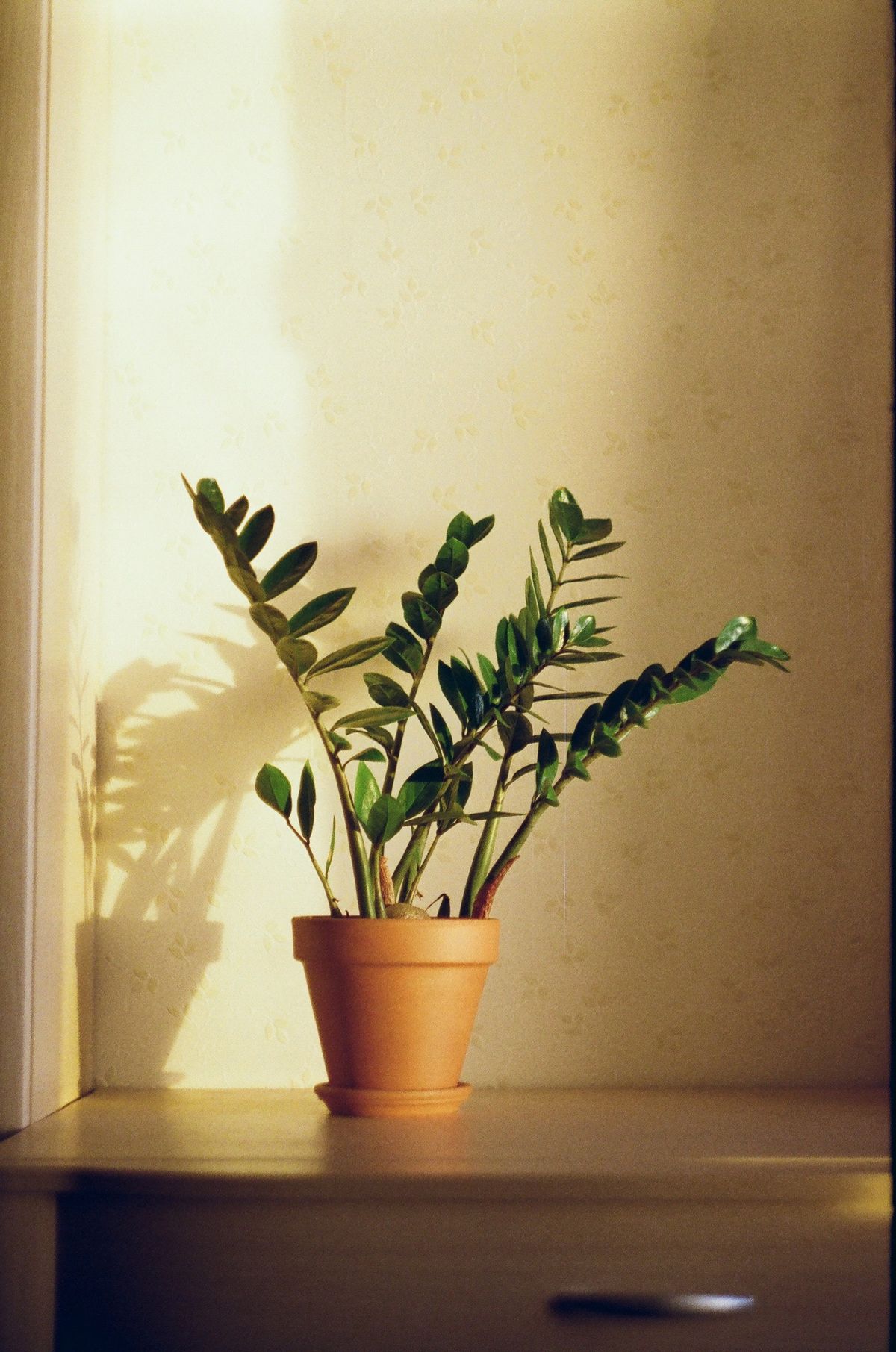
Zamioculcas zamiifolia — the ZZ plant — stores water in thick rhizomes underground, so it survives drought, low light and general neglect better than almost anything. It's the plant for a dark corner and a busy life.
Care at a glance
| Need | What it wants |
|---|---|
| Light | Low to medium. Avoid harsh direct sun. |
| Water | Every 2–3 weeks; let soil dry fully. |
| Soil | Free-draining; it rots in wet mix. |
| Humidity | Doesn't care. |
Slow to forgive overwatering
Because it stores water, an overwatered ZZ rots from the rhizome up and is hard to save. When unsure, wait a week.Where it shines
A north window, an office with no windows (with a grow light), a forgetful owner — the ZZ is built for it. Growth is slow, which is fine; it's meant to be steady.
My ZZ has yellow leaves.
Usually overwatering. Let it dry out completely and check the rhizomes aren't soft and black.
Is the ZZ plant toxic?
Yes, to pets and people if eaten. Wash hands after handling the sap.
Keeping a ZZ happy (mostly by leaving it alone)
The ZZ's superpower is its water-storing rhizomes. The best care is restraint: a bright spot if you have one, but it tolerates a dim corner; water every two to three weeks in summer, monthly or less in winter; never let the pot sit in water. New growth emerges as a shiny stem from the base — it's slow, so don't assume something's wrong when nothing happens for weeks.
| Symptom | Likely cause | Fix |
|---|---|---|
| Yellow, soft stems | Overwatering / rot | Dry completely; check rhizome |
| Stretched, pale new growth | Too little light | Move brighter |
| Leaf drop | Usually overwatering | Back off; let dry |
If the stems are firm and the rhizome isn't black and mushy, the plant is alive and well — just slow.