Yellow leaves panic new owners, but they're rarely a death sentence — and the pattern tells you exactly what's wrong. Location matters more than colour.
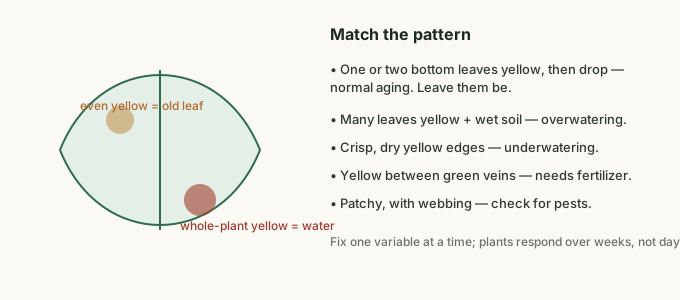
Read the pattern
- One or two bottom leaves, then they drop: normal aging. Leave them.
- Many leaves yellow on wet soil: overwatering. Let it dry, ease off.
- Crisp, dry yellow edges: underwatering. Soak thoroughly.
- Yellow between green veins: hunger — a half-strength feed helps.
- Patchy with fine webbing: pests. Inspect underneath.
Fix one thing at a time
Plants respond over weeks, not days. Change watering or feeding, watch for a month, then adjust again. Stacking fixes masks what worked.Should I pull yellow leaves off?
If they're fully yellow and dry, yes — the plant won't recover them and they waste energy. If partly green, leave them.
My plant yellowed after repotting.
Normal transplant shock. Keep care steady; new growth should be green.
What's normal vs. what's urgent
A plant shedding one or two bottom leaves as it grows is like you losing a hair — normal. What's not normal: rapid yellowing across the plant, yellow with soft black stems, or yellow with webbing. Those point to water or pests and need action.
| Pattern | Read it as | First move |
|---|---|---|
| 1–2 bottom leaves, then drop | Aging | Leave it |
| Many leaves, wet soil | Overwatering | Dry out; check roots |
| Crisp dry yellow edges | Underwatering | Soak |
| Yellow between green veins | Hunger | Half-strength feed |
Rule out the easy causes in order — water, then light, then pests, then food — and change one at a time. Plants respond over weeks, so give each change a month before deciding it failed.