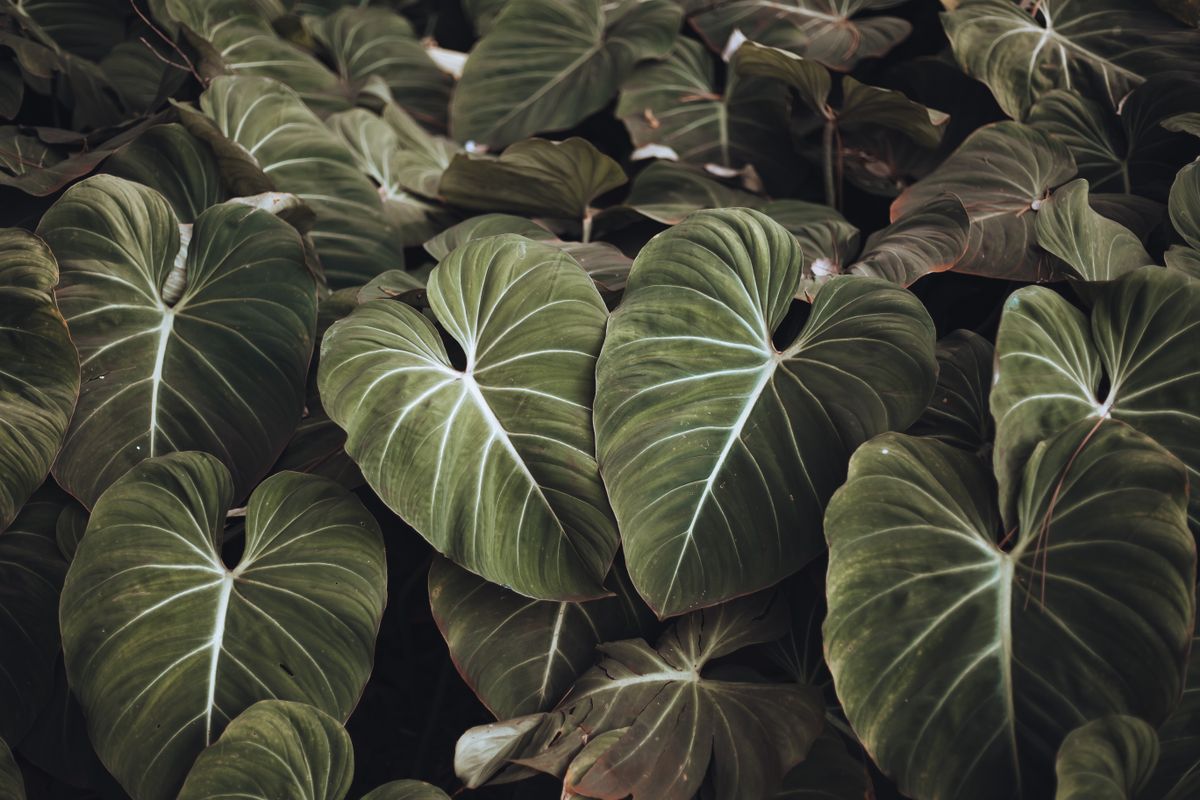
Philodendrons are a huge, friendly group — from the trailing heartleaf to the big split-leaf types. They're close cousins to pothos but generally softer-leaved and a touch more light-hungry.
Care at a glance
| Need | What it wants |
|---|---|
| Light | Medium to bright, indirect. |
| Water | When the top 3 cm dries. |
| Soil | Standard indoor mix with perlite. |
| Humidity | 40%+; happier with a little more. |
Heartleaf vs. tree types
The trailing hederaceum is the beginner favourite — tolerant and easy to propagate like pothos. Upright types (such as 'Birkin', 'Moonlight') want a bit more light to keep their variegation.
Toxic to pets
Like pothos, philodendrons irritate cats' and dogs' mouths. Hang or fence them off.Pothos or philodendron — which first?
Both are easy. Pothos is marginally tougher in low light; philodendron is softer-looking and trails nicely.
Why are new leaves pale?
Too little light or a nutrient gap. Brighten and feed half-strength in spring.
Trailing, splitting and staying healthy
The heartleaf philodendron is as easy as pothos and trails just as well. Give it medium to bright indirect light, water when the top 3 cm dries, and it will put out a new leaf every couple of weeks in season. Upright types ('Birkin', 'Moonlight', 'Prince of Orange') want a bit more light to keep their variegation sharp. Wipe leaves and rotate for even growth.
| Symptom | Likely cause | Fix |
|---|---|---|
| Pale new leaves | Too little light / hunger | Brighten; half-strength feed |
| Yellow, soft leaves | Overwatering | Let soil dry |
| Leggy, small leaves | Not enough light | Move brighter |
Philodendrons and pothos are cousins; if you can keep one, you can keep the other.